
SBL International Meeting Rome
Thursday, April 16, 2009.

SBL just announced the tentative program for the international meeting in Rome. The list of abstracts is available here, and the schedule is here.
Here are the abstracts for the Biblical Interpretation in Early Christianity session:
BIBLICAL INTERPRETATION IN EARLY CHRISTIANITY
D. Jeffrey Bingham
Description: This program unit explores the interpretative structures, methodologies, and concerns of patristic exegesis and the various assumptions underlying it.
John in the Apostolic Fathers: A Methodological Reappraisal
Program Unit: Biblical Interpretation in Early Christianity
Dan Batovici, University of Bucharest
The last (largely) sixty years have witnessed quite different results on the topic of the reception of the Fourth Gospel in the writings of the Apostolic Fathers. It is however within grasp to notice that these significantly differing results are indebted to the different methodological approaches assumed by each scholar. The aim of this paper is to reassess methodologically the bibliography on the reception of John – and generally the New Testament – in the second century and question whether and how it would fit best for an inquiry that places John in the center and restrains itself to the Apostolic Fathers. As far as the larger question of the New Testament reception in the second century is concerned it has been previously noticed that Massaux (1950) and Köster (1957) have set respectively maximalist and minimalist criteria for assessing this question. Subsequent scholarship on John in the second century is more or less to be confined to one of the two trends. Recently, however, the possibility itself to determine confident dependence on any New Testament text in the second century has been questioned, since our text editions reconstruct, for the New Testament, the fourth century text of the great uncials. In this perspective a more appropriate inquiry is: what do the recognizable parallels of the New Testament in the Apostolic Fathers tell us about the dynamics of the documents from the two corpora? (Petersen 2005). Therefore, since on the one hand – even though it is artificially constructed – the Apostolic Fathers corpus is a convenient and not all too large group of texts, and, on the other hand, the material resembling to John is rather scarce, a study developed on several levels might be not all out of the question.
Irenaeus and Hebrews
Program Unit: Biblical Interpretation in Early Christianity
D. Jeffrey Bingham, Dallas Theological Seminary
Origen's Sacramental View of Exegesis in Hom. Judic. 8
Program Unit: Biblical Interpretation in Early Christianity
Elizabeth Dively Lauro, Los Angeles, CA
Charis, Choris, and a Chorus of Patristic Interpreters of Hebrews 2:9
Program Unit: Biblical Interpretation in Early Christianity
Paul A. Hartog, Faith Baptist Theological Seminary
The manuscript tradition of Hebrews 2:9 overwhelmingly supports the reading, “by the grace of God ['chariti theou'], he tasted death for everyone.” Commentators note, however, that multiple church fathers supported a variant: “apart from God ['choris theou'], he tasted death for everyone.” Theodore of Mopsuestia had used the variant to argue that Jesus died “distinct from his deity.” Although Theophylact maintained that “Nestorians” had introduced this alteration for their purposes, several evidences refute his position. First, "choris theou" appears long before the fifth-century Christological controversies. Second, various Patristic authors had accepted the "choris theou" variant, but as a limitation of “cosmic salvation”: Jesus tasted death for everyone [or everything], “except God.” Origen, an early proponent of this “cosmic interpretation,” maintained that Jesus died for all rational beings (humans, angels, and even the stars), “apart from God.” Within a Patristic milieu that emphasized the “cosmic” ramifications of Jesus’ work, such a reading possessed great power. Nevertheless, the word order of Hebrews 2:9 and the overall argument of the passage counter such a death for all beings “except God.” In fact, verse 16 insists that Jesus died for humans and not for angels. One should not assume, however, that Patristic interpreters provide no hermeneutical assistance. Their “cosmic” insights into Hebrews 2 demonstrate that Jesus died as the representative Human in order that humanity might share in his subjugation of “all things” (2:8). In this manner, a “cosmic” outcome retains a secondary yet important role within the passage. This “cosmic” framework solves another interpretive quandary within 2:9. Although many commentators interpret the "huper" construction as denoting “substitution,” the wider context (with its emphasis upon humanity’s rule over the cosmos through Christ) supports a broader sense of "huper." Jesus died “for the benefit of” humans, so that they might participate in his exalted authority.
‘Partakers of the Holy Spirit’: Athanasius’ Pneumatological Exegesis of Hebrews 6:4
Program Unit: Biblical Interpretation in Early Christianity
Kevin Hill, Durham University
Both Eastern and Western Christian traditions usually remember Athanasius of Alexandria as an unwavering defender of the divinity of Jesus Christ, the incarnate Word of God. However, Athanasius was also one of the first writers to argue explicitly for the divinity of the Holy Spirit. In his four Letters to Serapion, Athanasius attempted to present a Scriptural demonstration of the Spirit's divinity. Athanasius' central argument in this enterprise relies on a premise shared with his opponents: the Holy Spirit deifies Christians. Based on this premise, Athanasius argued that the Spirit, by working to deify human beings, must be God—for, Athanasius assumed, only God can deify others. This paper argues that Hebrews 6:4 made three significant contributions to Athanasius' pneumatological arguments in the Letters to Serapion. In Heb 6:4 Athanasius found not only further support for the Spirit's divinity, but also answers to two crucial questions: i) How is it that Christians are deified by the Spirit? ii) How can the Holy Spirit's divinity be distinguished from the 'divinity' of deified Christians? By highlighting the significant role Hebrews 6:4 played in Athanasius' pneumatology, and by observing the concerns and assumptions that Athanasius brought to the text, this paper aims to offer a window into Athanasius' larger exegetical approach, which is an approach that is not uncommon to early Christian interpreters, because it consists of a movement from Christ and the Spirit, to the Scriptures, and then back to Christ and the Spirit. For Athanasius, the Scriptures must be interpreted in light of Christ and the Spirit, yet Christ and the Spirit are also revealed and interpreted by the Scriptures. In this way, the paper shall conclude by highlighting the paradoxical nature of this patristic hermeneutical approach itself.
Reading the Story of David with Jacob of Serugh
Program Unit: Biblical Interpretation in Early Christianity
Craig E. Morrison, Pontifical Biblical Institute
In his numerous memre, Jacob of Serugh (d. 521) often focuses on particular biblical stories. This paper considers how Jacob retells two biblical episodes: (1) the contest between David and Goliath (Memra 34) and (2) the story of David and Uriah (Memra 162). Particular attention will be given to how Jacob cites the biblical text and what his citations reveal about his exegetical approach to the Bible. The verbal and nonverbal signs that Jacob employs to signal a biblical reference will be identified and their function discussed. These two memre reveal how the story of David was received in Syriac Christianity.
The Role of Irenaeus in the Canon Debate
Program Unit: Biblical Interpretation in Early Christianity
Jonathan Harmon, Brigham Young University
In the overall study of the early Christian church, one of the most vexing, troublesome, and provocative areas, as Hans Lietzmann has stated, is that of the history of its canon. Central in the canon debate and one of the hot-topic issues has to do with the dating of a 'final' canon. Though most scholars agree that the end product took its final form, more or less, during the latter half of the fourth century, there are, however, scholars past and present who either ignore or reject this position. Theodor Zahn advocated that the canon was formed in the first century, certainly the earliest position by any scholar to date. Adolf von Harnack and Hans von Campenhausen both argued that the canon was formed out of a response to external theological challenges issued by Marcion, Gnosticism, and Montanism in the second century. More recently there have been many influential studies that ground the formation of the Christian biblical canon in the fourth century, but a considerable amount of doubt remains. Those who advocate an early dating often look to Irenaeus to provide examples of a fixed New Testament canon. It is true that he firmly holds the traditional four gospels to be authoritative, but to assume that he granted the same authority to the rest of the modern 27-book canon stretches Irenaeus’ witness beyond the evidence. This paper will analyze his use of all early Christian texts in proper context and show that Irenaeus should be seen as providing evidence for a later dating of the canon due to his flexible use of other texts, such as the Shepherd of Hermas, which he called scripture (graphe), the same term used for books of our New Testament. Upon careful analysis, Irenaeus’ writings make significant contributions to the debate over the final dating of the canon of the New Testament.
The Speaking God in Hebrews 1 and Early Christianity
Program Unit: Biblical Interpretation in Early Christianity
Stephen O. Presley, University of St. Andrews-Scotland
Hebrews 1:5-14 contains a network of texts brought together to assert the theological argument of Christ’s superiority over the angels. While many have provided exegetical analysis of this string of texts, few have sufficiently examined why the author of Hebrews chose these particular passages. In order to defend his theological agenda, the author of Hebrews appeals to specific Old Testament passages that record the direct speech of God. The unique choice of texts in Heb 1 reveals a strategy of early Christian exegesis that gravitated toward particular Old Testament accounts that record divine speech. This preference for divine speech is also evident in the theological exegesis of the second century fathers including Justin, Irenaeus, and others. This paper will explore this hallmark of early Christian interpretation of the Old Testament evidenced by the author of Hebrews and other early Christian exegetes that appeals to the direct discourse of God in support their theological claims.
Tentative Session Schedules
Biblical Interpretation in Early Christianity
7/03/2009 1:30 PM to 4:00 PM Room: Room TBD - Hotel TBD
Theme: Receiving, Dating, and Interpreting the Biblical Canon
D. Jeffrey Bingham, Dallas Theological Seminary, Presiding
Dan Batovici, University of Bucharest
John in the Apostolic Fathers: A Methodological Reappraisal (30 min)
Jonathan Harmon, Brigham Young University and Dave Nielsen, Brigham Young University
The Role of Irenaeus in the Canon Debate (30 min)
Elizabeth Dively Lauro, Los Angeles, CA
Origen's Sacramental View of Exegesis in Hom. Judic. 8 (30 min)
Break (30 min)
Craig E. Morrison, Pontifical Biblical Institute
Reading the Story of David with Jacob of Serugh (30 min)
Biblical Interpretation in Early Christianity
7/04/2009 8:30 AM to 11:15 AM Room: Room TBD - Hotel TBD
Theme: Hebrews in Early Christian Interpretation
Dan Batovici, University of Bucharest, Presiding (5 min)
Stephen O. Presley, University of St. Andrews-Scotland
The Speaking God in Hebrews 1 and Early Christianity (30 min)
D. Jeffrey Bingham, Dallas Theological Seminary
Irenaeus and Hebrews (30 min)
Kevin Hill, Durham University
'Partakers of the Holy Spirit': Athanasius' Pneumatological Exegesis of Hebrews 6:4 (30 min)
Break (30 min)
Paul A. Hartog, Faith Baptist Theological Seminary
Charis, Choris, and a Chorus of Patristic Interpreters of Hebrews 2:9 (30 min)
Discussion (10 min)
SBL Contributors from Durham
Righteousness and Glory: New Creation as Immortality in Romans
Program Unit: Paul and Pauline Literature
Ben C. Blackwell, Durham University
In the search for the meaning of righteousness language in Romans, studies rightfully focus upon the relationship of this language to other key concepts in the letter: faith, works, Law, and covenant, to name a few. However, one important terminological companion of righteousness has been neglected--that of glory (d??a and its cognates). Accordingly, this paper, after a brief exploration of the glory motif, will analyze how Paul intertwines these two concepts in the letter. I argue that Paul presents justification as the means to immortal life, signified by glory. My argument consists of three points. First, although Paul uses glory language sociologically in his honour discourse, he frequently uses it ontologically in reference to the experience of immortal life. Thus, when humans lack glory, they experience mortality, and when they later experience glory, they experience the resurrection life of Christ. Second, throughout the letter Paul presents righteousness as the means to new life. Third, Paul similarly presents righteousness as the means to glory. Thus, the righteousness-glory association provides further evidence that Paul understands justification as the means for rectifying human mortality arising from sin. Accordingly, we can conclude that in Romans 1) justification, among other things, is God’s act of new creation and therefore fits within God’s larger plan of cosmic restoration and 2) Paul does not separate participationist and forensic categories but unites them in the act of justification which brings new life.
The Motif of the Eschatological Final Battle in the War Scroll: Sectarianization in Practice
Program Unit: Apocalyptic Literature
Ted M. Erho, Durham University
The eschatological final battle was a well-established tradition in Antiquity with a number of elements, such as the centrality of Jerusalem to the conflict and its encirclement and inviolability, being consistently reproduced in its lengthiest versions found in Ezekiel 38-39, Sib. Or. 3.657-732, 1 En. 56:5-8, Rev 20, and 4 Ezra 13. Moreover, this idea appears to have also piqued the interest of at least some of the Qumran sectarians, resulting in the composition of the War Scroll, which contains virtually all of the fundamental criteria found in its counterparts, albeit dissimilarly interspersed between lengthy blocks of unassociated material. This general compatibility suggests that this composition contains a “Qumranized” variation of this motif based upon a relatively firmly established set of elements. While most of these specific aspects prove only slightly dissimilar in formation, the self-perception of the sect generated notable shifts with regard to the role of the elect in this battle and the precise nature of the role of God in bringing about the successful prosecution of the war on their behalf; these alterations may serve to illuminate and strengthen the current scholarly understanding of some significant theological impetuses of the community.
'Erastus, Quaestor of the City': The Administrative Rank of Ho Oikonomos tes Poleos (Romans 16:23)
Program Unit: Paul and Pauline Literature
John Goodrich, Durham University
Determining the administrative rank of Erastus, ho oikonomos tes poleos (Rom 16.23), has been a pursuit of great scholarly interest for many decades, not least because Erastus’ municipal position holds the potential for unlocking the social and economic status of at least one sector of the earliest urban churches. This seemingly simple lexical exercise has proved very difficult, however, largely because there exist no bilingual text from a Roman colony containing the municipal title and a Latin correlative. Still, several possibilities have been proposed: arcarius (H.J. Cadbury), quaestor (G. Theissen), and aedilis (B.W. Winter). Aedilis is a particularly attractive rendering for many NT scholars, because of the inscription which testifies to an Erastus who in the early empire served as aedilis of the colony of Corinth (Corinth 8.3.232). While this paper does not attempt to affirm or deny the identification of the two Erasti, its goal is to shed light on municipal oikonomoi of Greek and Roman cities through a host of relevant inscriptions. First, it will identify the administrative responsibilities associated with the post, showing oikonomoi to be city treasurers of various social standing who on occasion also participated in certain citywide religious activities. Second, fresh epigraphic evidence will be marshaled from the nearby colony of Patrai. In keeping with the warning of A.D. Clarke, that ‘No clear parallel can be drawn with Corinth unless recognition is given that the city was a colony, with a different administrative organisation than other Greek cities’, this data will demonstrate that in Roman colonies like Corinth the title oikonomos referred to a magistracy (thus ruling out arcarius), yet was not used synonymously with agoranomos (thus ruling out aedilis). Quaestor will then be suggested as the likeliest equivalent, with significant implications for Erastus’ social and economic status.
The Flood: Re-creation or Completion of Creation?
Program Unit: Pentateuch (Torah)
Elizabeth Harper, Durham University
'And God said "I will blot out the adam which I have created"'. Genesis 6:7 is one of the first of many apparent references to the P creation account found in the flood narrative. So frequent are the allusions that they beg for an explanation. The current answer is that the flood is an act of de-creation that returns the world to the watery void of Genesis 1:2, only to be re-created so as to give humanity a new start in a new world. However, a careful study reveals that Genesis 6-9 focuses almost exclusively on Genesis 1:20b-1:31, the sixth day, and ignores most of the rest of the creation account. The story does not then, it seems, portray a systematic de-creation of the world, which might, anyway, be in contradiction to the story's resolution to preserve a remnant of the old creation, despite its evil inclination (8:21). At most, the flood undoes the prolific spread of humanity found in Genesis 4-5 with its concurrent spread of evil and performs a kind of purification of the adamah, although the theme of cleansing is muted. After exploring the links, this paper will demonstrate that the current de-creation interpretations of the flood story all have substantial weaknesses. A possible alternative way forward would be to see the flood narrative, not as uncreation, but as part of the ongoing creation and organisation of the known world, begun, but not completed, in Genesis 1. (A similar suggestion is sometimes made for Atrahasis). Nothing physically new is created but the world is re-ordered (killing is prohibited, meat eating is permitted), fear of curse and punishment is alleviated and covenant, grace and promise are introduced as essential elements for the existence of the world.
‘Partakers of the Holy Spirit’: Athanasius’ Pneumatological Exegesis of Hebrews 6:4
Program Unit: Biblical Interpretation in Early Christianity
Kevin Hill, Durham University
Both Eastern and Western Christian traditions usually remember Athanasius of Alexandria as an unwavering defender of the divinity of Jesus Christ, the incarnate Word of God. However, Athanasius was also one of the first writers to argue explicitly for the divinity of the Holy Spirit. In his four Letters to Serapion, Athanasius attempted to present a Scriptural demonstration of the Spirit's divinity. Athanasius' central argument in this enterprise relies on a premise shared with his opponents: the Holy Spirit deifies Christians. Based on this premise, Athanasius argued that the Spirit, by working to deify human beings, must be God—for, Athanasius assumed, only God can deify others. This paper argues that Hebrews 6:4 made three significant contributions to Athanasius' pneumatological arguments in the Letters to Serapion. In Heb 6:4 Athanasius found not only further support for the Spirit's divinity, but also answers to two crucial questions: i) How is it that Christians are deified by the Spirit? ii) How can the Holy Spirit's divinity be distinguished from the 'divinity' of deified Christians? By highlighting the significant role Hebrews 6:4 played in Athanasius' pneumatology, and by observing the concerns and assumptions that Athanasius brought to the text, this paper aims to offer a window into Athanasius' larger exegetical approach, which is an approach that is not uncommon to early Christian interpreters, because it consists of a movement from Christ and the Spirit, to the Scriptures, and then back to Christ and the Spirit. For Athanasius, the Scriptures must be interpreted in light of Christ and the Spirit, yet Christ and the Spirit are also revealed and interpreted by the Scriptures. In this way, the paper shall conclude by highlighting the paradoxical nature of this patristic hermeneutical approach itself.
Name Calling at Qumran and in the Apocalypse of John: Identifying Phases of Sectarian Development Through Labels and Sobriquets
Program Unit: Apocalyptic Literature
Mark D. Mathews, University of Durham
Name-calling, or labelling, was and is an effective means of creating boundary markers and forming community identity. The sectarian documents found at the Qumran site demonstrate a sustained practice of using associative labels and sobriquets to make distinctions between the faithful community, as they understood it, and their opponents. In addition, some of the non-sectarian documents that were found at the site also demonstrate a similar practice, indicating this was a convention more widely circulating among Second Temple writers. One document in particular that employs significant labels for its enemies is the Epistle of Enoch. Interestingly, this same practice is shared by the author of the Book or Revelation, in particular with regard to his correspondence to the seven churches. Previous studies of this phenomenon have tended to focus on organizational terms that can be traced among the manuscript traditions of sectarian texts that define the leadership roles within the Qumran communities. What has not been discussed is how labels and sobriquets are employed across a variety of texts to discover if it is possible to identify different phases of community development. This essay examines both sectarian and non-sectarian documents from Qumran in order to ascertain the degree to which Second Temple writers demonstrate any coherent use of such devices in their writings. Moreover, attention is given to how these devices function within the development of a community’s identity. Finally, to the extent that the writer of the Book of Revelation shares in the implementation of these rhetorical devices and exhibits a decided concern for sectarian ideas, I compare what we can learn from the Second Temple texts with the Johannine Apocalypse to see if it is possible to surmise if and where the Book of Revelation might fit into the trajectory of sectarian formation.
The Question of Genre Concerning 2 Peter: A Comparison with Jewish and Early Christian Testaments
Program Unit: Pastoral and Catholic Epistles
Mark D. Mathews, University of Durham
Second Peter has been one of the most neglected of the New Testament letters both before and after its acceptance into the NT canon and considering the uniqueness of the book, rightfully so. The epistle is now generally accepted as a pseudo-apostolic letter based on the argument that it belongs to the testament genre. This categorization was first suggested by Reicke and later developed by Bauckham, whose thesis has been widely accepted. This essay seeks to compare the testamentary features of 2 Peter against the testaments from the Hebrew Bible and the Second Temple period as well as later Christian testaments. Recent scholarship has brought into question the provenance and dating of the testaments that are included in the so-called pseudepigrapha. If these documents reflect early Christian influence or even Christian interpolation of earlier Jewish works, this could bring into question whether 2 Peter would have been received as a testament by the early church. A comparison of the literary features of the testament genre and of documents that call themselves testaments is offered to consider whether the present consensus of 2 Peter as a testament is a sustainable argument.
Labels: DurhamU, Patristics
Patristic Abbreviations: Part 2
Saturday, March 28, 2009.
The abbreviations and CPG numbers for Origen and Cyril of Alexandria are finished. They should be online at FourthCentury.com in the next few days.
[Update]
The abbreviations are now available. Origen. Cyril of Alexandria.
Labels: Patristics, Previous
Patristic Abbreviations: Part 1
Sunday, February 22, 2009.
The first part of the Patristic Abbreviations Project is now online. Abbreviations and Clavis Patrum Graecorum numbers for the works of Athanasius are available at www.fourthcentury.com.
I've started working on abbreviations for Origen. I'll let you know when they are finished.
Labels: Patristics, Previous
Patristic Abbreviations: Athanasius
Thursday, February 12, 2009.
Authentic and Spurious Works of Athanasius of Alexandria
Abbrevations according to G. W. H. Lampe, A Patristic Greek Lexicon, Oxford: Clarendon Press, 1961. Lampe uses † to denote works of doubtful authorship and ‡ to denote spurious works. For more recent judgements regarding the authenticity of various works, see Timothy Barnes, Athanasius and Constantius: Theology and Politics in the Constantinian Empire (1993) and David Brakke, ‘The Authenticity of the Ascetic Athanasiana,’ Orientalia 63 (1994).
| apol. Const. | apologia ad Constantium | |
| apol. sec. | apologia (secunda) contra Arianos | |
| Ar. 1-3 | orationes tres adversus Arianos | |
| decr. | de decretis Nicaenae | |
| Dion. | de sententia Dionysii | |
| ep. Adelph. | epistula ad Adelphium | |
| ep. Aeg. Lib. | epistula ad episcopos Aegypti et Libyae | |
| ep. Afr. | epistula ad Afros episcopos | |
| ep. Amun. | epistula ad Amunem | |
| ep. Drac. | epistula ad Dracontium | |
| ep. encycl. | epistula encyclica | |
| ep. Epict. | epistula ad Epictetum | |
| ep. fest. | epistularum festivalium fragmenta | |
| ep. fest. 39 | epistula festivalis trecesima nona | |
| ep. Jo. et Ant. | epistula ad Joannem et Antiochum | |
| ep. Jov. | epistula ad Jovianum | |
| ep. Marcell. | epistula ad Marcellinum | |
| ep. Max. | epistula ad Maximum | |
| ep. mon. | epistula ad monachos | |
| ep. mort. Ar. | epistula ad Serapionem de morte Arii | |
| ep. Ors. 1-2 | epistulae ad Orsisium | |
| ep. Pall. | epistula ad Palladium | |
| ep. Rufin. | epistula ad Rufinianum | |
| ep. Serap. 1-4 | epistulae ad Serapionem | |
| fr. Job | fragmenta in Job | |
| exp. Ps. | expositio in Pss. | |
| fr. Pss. comm. | fragmenta commentarii in Pss. | |
| fr. Cant. | fragmenta in Cant. | |
| hom. in Mt. 11:27 | homilia in illud | |
| † fr. Mt. | fragmenta in Mt. | |
| fr. Lc. | fragmenta in Lc. | |
| † exp. fid. | expositio fidei | |
| † fr. | fragmenta varia | |
| fug. | apologia de fuga sua | |
| gent. | contra gentes | |
| h. Ar. | historia Arianorum ad monachos | |
| h. Ar. ep. | ad historiam Arianorum ad monachos epistula | |
| inc. | de incarnatione | |
| inc. et c. Ar. | de incarnatione et contra Arianos | |
| narr. fug. | narratio ad Ammonium episcopum de fuga | |
| syn. | epistula de synodis Arimini et Seleuciae | |
| tom. | tomus ad Antiochenos | |
| v. Anton. | vita Antonii | |
| virg. | de virginitate | |
| ‡ annunt. | homilia in annuntiationem deiparae | |
| ‡ Apoll. 1-2 | de incarnatione contra Apollinarem | |
| ‡ Ar. 4 | oratio quarta contra Arianos | |
| ‡ ascens. | homilia in assumptionem domini | |
| ‡ caec. | homilia in caecum a nativitate | |
| ‡ comm. essent. | de communi essentia Patris et Filii et Spiritus sancti | |
| ‡ confut. | confutatio quarundam propositionum | |
| ‡ corp. | de corpore et anima | |
| ‡ def. | liber de definitionibus | |
| ‡ desc. BMV | homilia de descriptione deiparae | |
| ‡ diab. | homilia in diabolum | |
| ‡ dial. Trin. 1-5 | de Trinitate dialogi | |
| ‡ disp. | disputatio cum Ario in synodo | |
| ‡ doct. Ant. | doctrina ad Antiochum ducem | |
| ‡ doct. mon. | doctrina ad monachos | |
| ‡ ep. Cast. 1-2 | epistulae ad Castorem | |
| ‡ ep. cath. | epistula catholica | |
| ‡ ep. Lib. | epistula ad Liberium | |
| ‡ ep. Pers. | epistula ad episcopum Persarum | |
| ‡ fr. Ps. | fragmenta in Pss. | |
| ‡ hom. in Mt. 21:2 | homilia in illud. | |
| ‡ hom. in Mt. 21:9 | homilia in illud. | |
| ‡ hom. in Lc. 19:36 | homilia in illud. | |
| ‡ fr. in 1 Cor. 7:1 | fragmentum in illud. | |
| ‡ fr. in 2 Cor. 12:2 | fragmentum in illud. | |
| ‡ fr. in 2 Cor. 12:7 | fragmentum in illud. | |
| ‡ exhort. | sermo exhortatorius | |
| ‡ haer. | sermo contra omnes haereses | |
| ‡ imag. | fragmentum sermonis de sacris imaginibus | |
| ‡ imag. Beryt. | sermo in imaginem Berytensem | |
| ‡ inst. mon. | vitae monasticae institutio | |
| ‡ interpr. | interpretatio symboli | |
| ‡ Jov. | ad imperatorem Jovianum | |
| ‡ Lat. | sermo contra Latinos | |
| ‡ Maced. dial. 1-2 | contra Macedonianos dialogi | |
| ‡ Melch. | historia de Melchisedech | |
| ‡ nativ. Chr. | homilia in nativitate Christi | |
| ‡ nativ. Jo. Bapt. | homilia in nativitate praecursoris | |
| ‡ Novat. | contra Novatianos fragmenta | |
| ‡ occurs. | homilia in occursum Domini | |
| ‡ palm. | homilia in ramos palmarum | |
| ‡ parasc. | sermo in passionem domini in parasceve | |
| ‡ pasch. 1-2 | sermones in pascha | |
| ‡ pass. | homilia de passione et cruce domini | |
| ‡ pat. | sermo de patientia | |
| ‡ poenit. can. | canones poenitentiales | |
| ‡ polit. | syntagma ad quemdam politicum | |
| ‡ prod. Jud. | homilia in proditionem Judae | |
| ‡ proph. | homilia in patres et prophetas | |
| ‡ qu. al. 1-20 | quaestiones aliae | |
| ‡ qu. Ant. 1-137 | quaestiones ad Antiochum | |
| ‡ qu.ev. 1-36 | in evangelia | |
| ‡ qu. script. 1-130 | quaestiones scripturas | |
| ‡ ref. | refutatio hypocrisis | |
| ‡ renunt. | sermo pro iis qui saeculo renuntiarunt | |
| ‡ sabb. | de sabbatis et circumcisione | |
| ‡ Sabell. | contra Sabellianos | |
| ‡ sem. | homilia de semente | |
| ‡ serm. Ant. | sermo ad Antiochum ducem | |
| ‡ serm. fid. | sermo major de fide | |
| ‡ symb. | symbolum ‘Quicumque’ seu Athanasianum dictum | |
| ‡ synops. | synopsis sacrae scripturae | |
| ‡ syntag. | syntagma doctrinae admonachos | |
| ‡ templ. | commentarius de templo Athanarum | |
| ‡ theopasch. | contra theopaschitas | |
| ‡ Trin. | de Trinitate | |
| ‡ v. Syncl. | vita Syncleticae |
Labels: Athanasius, Patristics, Previous
Patristic Abbreviations - A New Project
Thursday, February 12, 2009.
While writing on various Patristic sources, I have often wished that there was a way to quickly track down the standard abbreviations for these works. Most journals and monographs follow the abbreviations in Lampe's Patristic Greek Lexicon, but this volume is too expensive to own and too big to carry around. To partially fill this gap I have created a table listing Lampe's abbreviations for the entire Athanasiana. (See the post above.) I have also decided to begin digitising the rest of these abbreviations.
Dr. Glen Thompson has kindly agreed to host this list, and any others that may follow, at www.fourthcentury.com. I will keep you updated as the project moves ahead. If anyone would like to assist with digitising these abbreviations, please let me know. This is a huge project, and it may not be completed without assistance!
Labels: Patristics, Previous
Origen Gives Us Hope for the Road Ahead:
Friday, January 09, 2009.
“It is far better ‘to die in the wilderness’ than ‘to serve the Egyptians.’ For he who dies in the wilderness, for the very reason that he has been separated from the Egyptians and has departed from ‘the rulers of darkness’ and from the power of Satan, has a certain perfection even if he was not able to arrive at completion. For it is better for one seeking the perfect life to die on the way than not to set out to seek perfection.” Ex Hom 5 p.281-2
The idea of one's trajectory is important to Origen. One ought to strive for perfection (which, in this life consists of attaining the virtues and an invicible faith), but if one does not reach this state, all may not be lost. In the Greek fragments of his Commentary on Romans, Origen emphasizes very clearly that our salvation is dependent upon grace—for even living faith (the sort that bears fruit) is a gift of God.
Labels: Origen, Patristics, Previous
Glory to God for All Things
Friday, December 26, 2008.
The Greek Fathers are sometimes accused of overemphasising the role of human beings in the divine life. Although these Fathers insist that people do have a role to play in their redemption, most teach that this role is altogether very small and indeed almost inconsequential when compared to that of God. St. John Chrysostom expresses this relationship well, though his perspective is by no means unique.
“Consider how [Jesus Christ] teaches us to be humble, by making us see that our virtue does not depend on our work alone but on grace from on high. He commands each of the faithful who prays to do so universally, for the whole world. For he did not say “thy will be done in me or in us,” but “on earth,” the whole earth, so that error may be banished from it, truth take root in it, all vice be destroyed on it, virtue flourish on it, and earth no longer differ from heaven.”
St. John Chrysostom on the Lord's Prayer
On a side note, the the title of this post, which also comes from Chrysostom, is the name of an excellent blog by an Eastern Orthodox priest in the United States: “Glory to God for All Things”.
Labels: Patristics, Previous, Salvation
Chronological Chart of Athanasius' Works
Wednesday, December 03, 2008.
The contributors at FourthCentury.com have compiled an excellent chart outlining the chronology of Athanasius' writings. The chart primarily follows the dates given by Timothy D. Barnes (see Athanasius and Constantius: Theology and Politics in the Constantinian Empire). Barnes is an expert in these matters, and he proposes dates that are sound though sometimes disputable. The chart is available at: www.fourthcentury.com.
Labels: Athanasius, Patristics, Previous
Patristics Seminar: Paper #3
Monday, November 10, 2008.
Moses as Exemplar Among Early Christian Readers
by Pak-Wah Lai, PhD research student at Durham University
6 November, 2008
Last week Mr. Pak-Wah Lai presented a paper on the use of Moses as an exemplar in early Christian writers. Lai opened by sharing some contemporary views of Moses. Drawing on popular book titles, Lai suggested that Moses is often interpreted according to the values and problems of a culture.
 Lai then summarised the Jewish and Greek traditions that helped shape later Christian descriptions of Moses. One of the most interesting points here concerned ancient Greek biographies. In Greek biographical literature lives are often shaped according to the biographical paradigm of i) origins, ii) upbringing, iii) and deeds. In the Jewish tradition, Moses is often portrayed as the servant of God, the friend of God, a man of prayer, a follower of the Law, and as a prophet. One of the most common and important motifs is Moses as the faithful servant of God. Lai also noted that Moses is remembered in the OT according to his four offices: leader, and law-giver, prophet, and priest. In Second Temple literature, Moses was re-conceived as the archetypal figure or model for people to pattern their life after, and for certain vocations to model (e.g. prophets, leaders, philosopher kings). Moses also becomes the exemplary figure who embodies certain virtues.
After discussing Moses in Philo, Lai proceeded to discuss Moses in the New Testament and Apostolic era. Lai noted that the first Christians appear to have maintained the traditional motifs of Moses (e.g. as archetypal leader). But Moses was also transformed in light of the Christ event. Christ is now the superior of the two, and Moses is often recast as a Christian prophet and allegorically interpreted as a type of Christ. The Mosaic writings were also allegorically interpreted as witnesses anticipating Christ.
Next, Lai examined the images of Moses in Justin Matyr, Clement of Alexandria, Origen, the Cappadocian Fathers, and John Chrysostom. Justin Martyr portrays Moses as a prophet of Christ, the allegorist of Christ, and the philosopher par excellance. Clement of Alexandria envisions Moses as one who was instructed by Christ, and who instructs the Jews in preparation for Christ. Moses is the exemplary student of Christ. Origen assumes the portrait of Moses as allegorist and gives great weight to the spiritual meaning of Moses’ writings. Moses is also envisioned as an example of one who prays rightly.
In the fourth century the Cappadocian Fathers continued to use Moses as a Christian exemplar. Basil of Caesarea provides a biography of Moses’ life that is clearly drawn from earlier biographies of Moses, and which stresses Moses’ origins, upbringing, deeds. Like Clement of Alexandria, Moses leads a philosophic life and attains the vision of God so far as is possible. This vision of God is only possible because it has been granted by God. Moses is also a type of Christ: Moses like Christ is a mediator between God and man. For Gregory of Nazianzus, Moses is an example of how to do theological inquiry. Moses is also a measure against which Christian bishops can be compared, for he is the ideal leader. For Gregory of Nyssa, Moses is the exemplary Christian mystic.
Finally, Pak-Wah focused on the subject in John Chrysostom. Chrysostom largely adopts traditional views (e.g. Moses as a prophet of Christ). Chrysostom also compares Moses with Paul as a teacher of Christ, though Paul is greater than Moses. Chrysostom stresses Moses’ poor origins, though he inverts the usual paradigm. Moses had poor origins but still became faithful to God. Pak-Wah used these and other examples to demonstrate that Chrysostom presents Moses as the archetypal Christian and the exemplary man of prayer.
From this survey, Lai concluded that the early Chrisitans affirmed the Mosaic and biographical traditions which they had inherited, but that they also shaped the image of Moses into one which resembled themselves and their values. In this way, the early Christians appropriated these traditions for their contemporary issues, painting Moses an exemplary figure relevant to their own contexts.
In 60 minutes Lai managed to offer accurate analyses of a wide time period. His presentation was clear and his summaries insightful.
Labels: DurhamU, Patristics, Previous
Patristics Carnival 17
Thursday, November 06, 2008.
Weekend Fisher has posted Patristics Carnival 17. This carnival, like those before it, highlights recent bloggings on the Church Fathers, putting links to them on a single page. Click here to visit the Patristics Carnival.
Labels: Patristics, Previous
An Introduction to Deification / Theosis
Monday, November 03, 2008.
A few days ago I stumbled upon a blog with an interesting entry on Athanasius. In the entry, the blogger reported his experiences of reading Athanasius' On the Incarnation of the Word. He was struck by the same thing that I was the first time I read it: 'God became man that man might become God.' To the ears of most Protestants who have not heard of deification/theosis, this phrase sounds preposterous—perhaps even blasphemous.
 When I first read this, I was fortunate enough to have a professor with whom I could discuss it. He helped put the phrase in its context and explain what Athanasius and other Fathers meant by this language. He told me that I had come across a completely different vision of salvation, which is called deification or theosis.
Several years later, Professor Andrew Louth added further details: deification is not an element of salvation; salvation is an element of deification, for deification encompasses salvation. For Fathers such as St. Irenaeus, salvation marks a return or restoration of humanity to its original state of innocence, but deification is the means by which human beings progress into something far beyond mere innocence. Deification marks the maturation of the person into the full image and likeness of God, which is expressed by love, guided by reason, and empowered by divine grace and communion.
I don't know if this blogger has access to similar people, so I wrote a brief introductory explanation of deification / theosis. I have posted it below, if you are interested:
...What you have highlighted is an expression of Athanasius' doctrine of deification (which St. Gregory of Nazianzus later named 'theosis'). Athanasius, like many others before him (including Irenaeus), affirms that God truly became man, lived, died, and was raised from the dead, not only to save humanity from sin and death (which have a lot to do with ontology and going out of existence—not merely with what Prostestants might describe as 'justice'), but also to restore human beings to the image and likeness of God.
As I'm sure you noticed, Athanasius is very careful to distinguish between the created and the Creator. Athanasius teaches that the final goal of human life is to be deified, but this deification is ultimately about being conformed to the divine image and likeness (which includes knowledge and communion with God, along with holiness, obedience, and love, among other things). For Athanasius, and Irenaeus, we are made 'gods' by the Son and Holy Spirit, but even then we remain creatures—we are never 'God' in the same way that the Father, Son, and Holy Spirit are 'God', for we remain dependent upon God for our existence and have been created by God, whereas the Triune God is eternal and uncreated.
One of the central ways that deification is described is by the language of participation. Irenaeus and Athanasius teach that in the incarnation human nature itself was deified 'in Christ'. Yet, this deification remains to be realised in us. We must choose to 'opt in' to it, by following God and allowing His Spirit to sanctify us, as we strive to love and obey Him, and become like the Logos, i.e. live according to reason. When we begin to live in this way, we begin to participate in the life of God, and begin moving towards deification.
For an excellent survey of the history of the doctrine, see Norman Russell, The Doctrine of Deification in the Greek Patristic Tradition, Oxford: Oxford University Press, 2004.
Labels: Patristics, Previous
Patristics Seminar: Paper #1
Saturday, November 01, 2008.
Naming God
by Dr. Krastu Banev, lecturer at Durham University
23 October, 2008
The 2008-9 Durham Patristics Seminar began with a presentation by Dr. Krastu Banev. Banev, who was recently appointed as a lecturer of Greek Patristics at Durham University, gave an insightful paper on the history of the naming of God in the Bible and the Eastern Christian tradition. I found this paper particularly engaging because it highlighted the depth and coherence behind the Orthodox emphasis on the divine name.
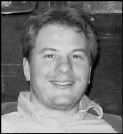 Dr. Banev opened by discussing the theme of names in the Bible. In this section he made three main points. First, He argued that a name is linked to the essence it describes. So, for example, Eve is linked to life. A name can also be linked to an event. Because of this connection between a name and the essence or event it describes, to blaspheme against a name is to blaspheme against the person who bears the name. Second, he argued that to change a name is to enter into a new relationship. Abram/Abraham is an example of this phenomenon. Third, he suggested that it is only through names that we can have remembrance. The name, he contended, is also the means by which God remembers us. Names are necessary for our existence because it is by means of our name that we derive our existence from God.
The rest of the paper focused on the history of naming God in the Eastern Church. Dr. Banev quickly summarised the theme in a couple of philosophers and a number of theologians. Here are his observations.
- Plato: natural / essential view (somewhat similar to the Biblical view).
- Aristotle: subjective
- Origen: the name refers to the nature
- Eunomius: believed he could totally grasp God by the name agennetos.
- The Cappadocian Fathers: the name does not capture the essence. It gives us the relationship of the persons; it is not the essence.
- Pseudo-Dionysius: God must be beyond names. Names are symbols of God's acts.
Finally, he discussed the subject in 20th century Russia. In the early 1900's a new movement established itself by teaching that 'the name of God is God himself, and it works miracles.' This movement was known as the 'worshippers of the name,' and they quickly and forcefully took over the largest skete on Mount Athos. In 1912 Russia declared this a heretical teaching. Later, the Russian Pavel Florensky defended the movement and offered a more nuanced perspective: 'The name of God is God himself, but God Himself is not the name.' Florensky wanted to clarify that God is not encompassed by His name. Florensky was exiled for his position, and the perspective of the 'name worshippers' remains a problem in Russia to this day.
Labels: DurhamU, Patristics, Previous
Durham Patristics Seminar 2008
Friday, October 17, 2008.
Michaelmas 2008
Thursday 23 October
Krastu Banev
Naming God
Thursday 30 October
Kevin Hill
The Spirit of Life: Pneumatology and Deification in St Irenaeus and his Predecessors
Thursday 6 November
Pak Wah Lai
Moses as Exemplar among Early Christian Readers
Thursday 13 November
Jonathan Zecher
Towards a Canonical Reading of the Byzantine Funeral Liturgy: Its History, Development, and Coherence
Thursday 20 and 27 November
Readings from Clement of Alexandria from Whitacre’s Patristic Greek Reader, led by Krastu Banev
Thursday 4 December
David Bradshaw, University of Kentucky
Mind and Heart in Christian East and West
All seminars at 4.15 p.m. in Seminar Room C
(Though intended for postgraduates (both MA and research) interested in Patristic and Byzantine studies, these seminars are open to anyone who is interested in the subjects discussed.)
Labels: DurhamU, Patristics, Previous
To believe in your heart
Tuesday, November 13, 2007.
Here is another paragraph that continues Origen's thoughts on the subject of justification.
But also observe what he says, "That if you confess with your mouth that Jesus is Lord and believe in your heart that he raised that God from the dead, you will be saved." For through this it will seem to some that even if a person lacks the advantages of good works, even if he fails to put forth effort for the virtues, nevertheless, by this, that he has believed, he would not perish but would be saved and would possess salvation, even though he would be unable to possess the glory of blessedness. But consider whether instead it ought to be understood that whoever truly, and not falsely, confesses with the mouth that Jesus is Lord and believes in the heart would equally confess himself to be subjected to the lordship of wisdom, righteousness, truth, and to everything that Christ is. He confesses mammon not to be his lord any longer, that is to say, he is no longer to be under the lordship of greed, unrighteousness, unchastity, or lying. For, having confessed once and for all that Jesus Christ is Lord, he is declaring publicly that he is not a slave of any of these things. Moreover, by believing in his heart that God raised him from the dead, it is certain that he believes him raised unto his own justification. Otherwise, what would it profit me to know and believe that God raised Jesus from the dead? If I shoud not have him raised within myself, if I neither walk in the newness of life nor flee from the old habit of sinning, Christ has not yet resurrected from the dead to me. The words that follow agree with this sense as well, which say, "For the Scripture says that everyone who believes in him will not be ashamed." This is written in Isaiah. But if everyone who believes in him is not ashamed, but everyone who sins is ashamed, just as also Adam sinned and was ashamed and hid himself, anyone who still encouters the shame of sin seems not to believe.
(Or.Rom.8.2.7-8 (Scheck)
Labels: Patristics, Previous, Salvation
Origen on Infant Baptism
Tuesday, October 30, 2007.
In his commentary on Romans, Origen explains that we all innately possess sin's defilement. It was in recognition of this that the early church baptised infants. Origen writes, "It is on this account as well that the Church has received the tradition from the apostles to give baptism even to little children. For they to whom the secrets of the divine mysteries were committed were aware than in everyone was sin's innate defilement, which needed to be washed away through water and the Spirit."
Or.Rom5.9.11 (Scheck)
Labels: Baptism, Origen, Patristics, Previous
Origen on Sinners
Tuesday, October 30, 2007.
Origen introduces an interesting distinction between those who have sinned and those who are sinners. The element that marks some as sinners and others as only having sinned is their habits. Those who repeatedly sin are sinners; those who occasionally sin are not, though they have still sinned. He uses an analogy of a physician to illustrate this distinction. Just as one who occasionally bandages a wound is not a doctor, so one who occasionally sins is not a sinner.
(Note: the text below has been scanned and converted, so it may have some typos due to the software)
It is one thing to have sinned, another to be a sinner.
One is called a sinner who. bv committing many transgressions,
has already reached the- point of making sinning into a habit
and, so to speak, a course of study. Just as, on the other hand,
one is not called righteous who lias once or twice done some
righteous act, but who continually behaves justiv and keeps
righteousness in use and makes it habitual. For if someone is
unjust in nearly all oilier matters but should carrv out some just
work one or two limes, he will indeed be said to have acted just-
ly in that work in which lie practiced justice; nevertheless he
will not on that basis be called a just man. Similarly it will in-
deed be said that a righteous man has sinned if he has at some
time committed what is not lawful. But lie will not on that ac-
count be labeled a sinner, since he does not hold last to the
practice and habit of sinning. Just as one is not called a physi-
cian who knows how to place a bandage lightly upon the skin of
a head wound, or who can sooth the swelling of an injury with
hot water, even though this seems to belong to tlie art of medi-
cine. Rather one is called a physician who maintains the use
and study and instruction of medical science.
By all this I think it has been sufficiently shown that it is
one thing to sin and another to be a sinner. For it can happen
that all people commit sin, even if they are holy, since "no one
is pure from uncleanness, not even if his life should be one day
long."321 For who is there who does not sin either in deed or in
word or, if one is extremely cautious, at least in thought? There-
fore, as I have said, everyone will deservedly be said to have
sinned, but not all have become sinners, only many.
(Or.Rom.5.5.2-3 (Scheck)
Labels: Origen, Patristics, Previous, Sin
Origen on Justification
Tuesday, October 30, 2007.
"Where then is your boasting? It is excluded. Through what law? Through that of works? No but through the law of faith. For we hold that a man is justified through faith without works of the law."
Romans 3.27-28
[Paul] is saying that the justification of faith alone suffices, so that the one who only believes is justified, even if he has not accomplished a single work.
...
But perhaps someone who hears these things should become lax and negligent in doing good, if in fact faith alone suffices for him to be justified. To this person we shall say that if anyone acts unjustly after justification, it is scarcely to be doubted that he has rejected the grace of justification. For a person does not receive the forgiveness of sins in order that he should once again imagine that he has been given a license to sin; for the remission is not given for future crimes, but only for past ones.
Now then let us return to our theme. A human being is justified through faith; the works of the law contribute nothing to his being justified. But where there is no faith which justifies the believer, even if one possesses works from the law, nevertheless because they have not been built upon the foundation of faith, although they might appear to be good things, nevertheless they are not able to justify the one doing them, because from them faith is absent, which is the sign of those who are justified by God.
...
There is no common ground between faith and infidelity; there is no communion of righteousness with wickedness, just as light can have no fellowship with darkness. For if "he who believes that Jesus is the Christ has been born of God" and "he who has been born of GOd does not sin," it is plain that he who believes in Jesus Christ does not sin; and that if he sins, it is certain that he does not believe in him. Therefore the proof of true faith is that sin is not being committed, just as, on the contrary, where sin is being committed there you have proof of unbelief. For this reason then it is also said of Abraham in another passage of Scripture that he was justified by works of faith. For it is certain that he who truly believes works the work of faith and righteousness and of complete goodness and becomes capable of both kinds of boasting: both that which is in secret before God as well as that which is openly visible and is not only before God."
...
Now it may perhaps appear that what is said to be "of faith" is not by grace since, if a person must first offer his faith, grace thus has to be merited from God. But listen to what the same Apostle teaches elsewhere about this as well. For in the passage where he lists the gifts of the Spirit, which he says are given to believers according to the measure of their faith, he asserta that the gift of faith as well is granted along with the other gifts through the Holy Spirit. For after many words he speaks of it in this way, "To another faith is gven by the same Spirit," in order to show that even faith is given through grace. Moreover elsewhere the same Apostle teaches this when he says, "Because it has been granted to you from God not only that you believe in Christ but also that you should suffer on his behalf." You find this also pointed out in the Gospels, where the Apostles, once understanding that faith, which is only human, cannot be perfected unless that which comes from God should be added to it, say to the Savior, "Increase our faith!"
Or.Rom.3.9.2, 4-5; 4.1.6; 4.5.3 (Scheck)
Labels: Origen, Patristics, Previous, Salvation
Patristic Greek Texts Online
Friday, August 31, 2007.

I recently discovered a website that offers portions of Migne's Patrologia Graeca for free. For those unfamiliar with this work, the PG is a series of Patristic texts in Greek, and is a primary source for nearly all academic works on Patristics. The authors of the site have re-typed the texts and offer them in pdf format. This should be a tremendous resource for students of the Greek Fathers; we are now only a click away from many important texts.
Link: "Roads of Faith: Digital Patrology"
[note: the site is entirely in Greek]
Labels: Greek, Patristics, Previous
Blogroll